
Siki Sufin
Taiwan
.jpg)
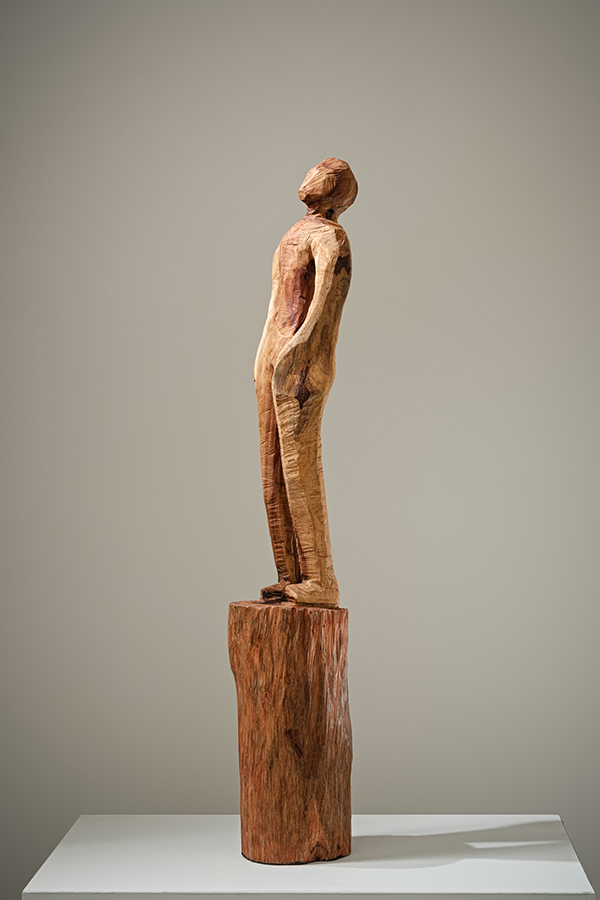
Siki Sufin (Han name Liao Yi-sheng) (Amis) grew up during the era of Indigenous movements in the 1980s and 1990s, and like most of his peers, began frequently moving between tribal villages and cities. Working on construction sites, he faced language barriers between different Indigenous languages, but speaking Mandarin was the safest and most reliable means of communication. After the "awakening" of that era, he decided in the late 1990s to return to Dulan. This homecoming sparked his creative impulse. He was successively enlightened and influenced by mature East Coast artists at the time, such as Rahic Talif, A Shui (Chen Zheng-rui), Lin Yiqian, and Hagu. He entered the world of woodcarving, integrating Amis culture, mythology, and legends into his work. Around 2003–2004, he became moved by the elders in his community who had served in the Takasago Volunteers under Japanese colonial rule and as
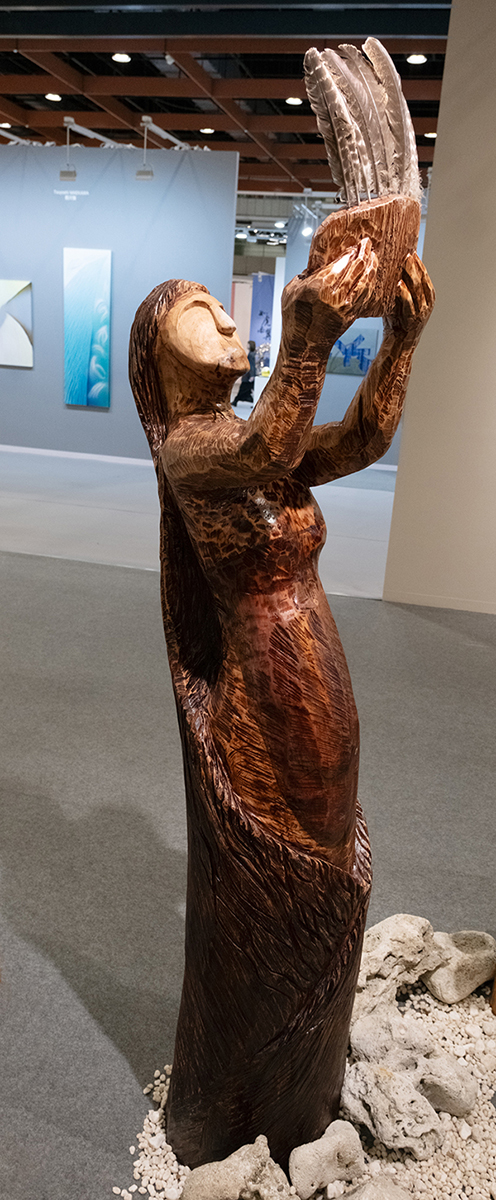
Taiwanese veterans conscripted by the Nationalist government to fight in the Chinese Civil War after World War II. Their stories had gradually become forgotten as a "dark history." Many had gone to battle at a very young age and died far from home. The woodcarvings exhibited in this show mainly derive from this series. The work "Mother Earth" depicts a mother raising a feathered crown to crown the young warriors who never reached adulthood. Other works such as "Wings to Take Me Home" draw on an Amis song: "Friend, please bring me a pair of wings to take me home, my friend," expressing the soul’s plea for wings to fly back home from wandering in foreign lands.