
Laluyu Pavelav
Taiwan
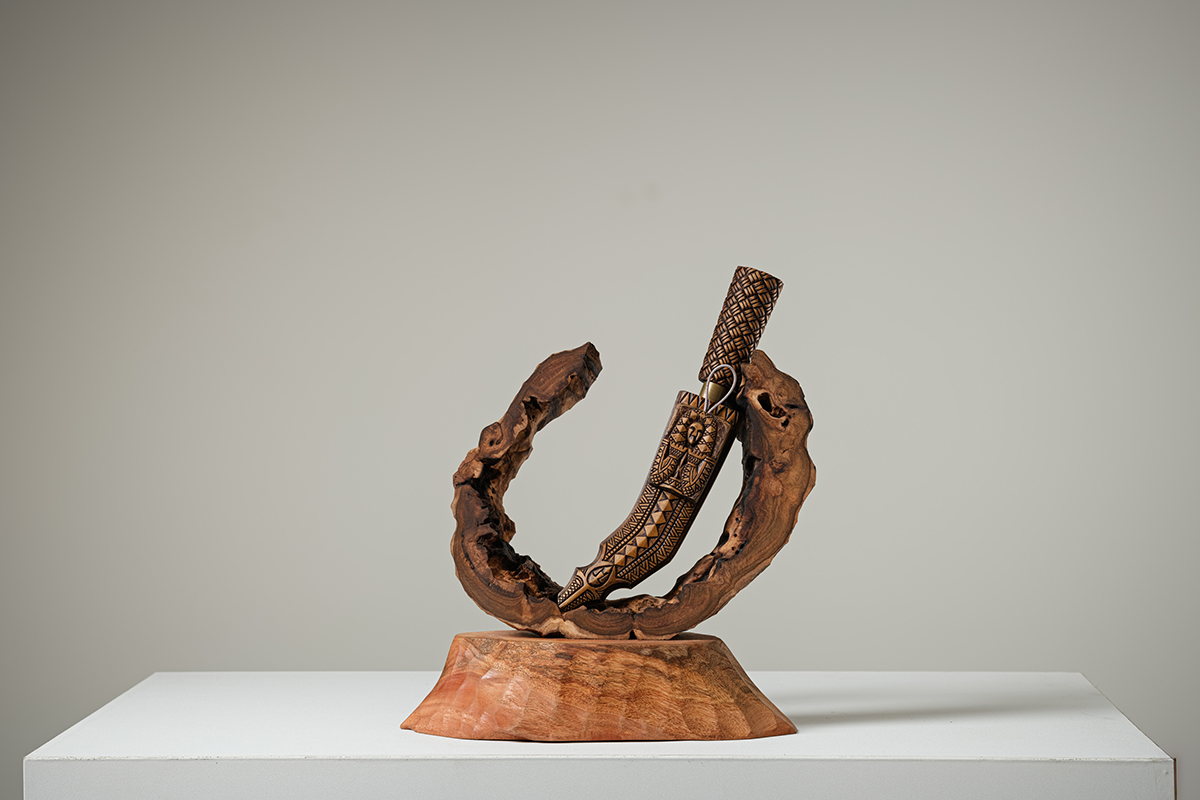
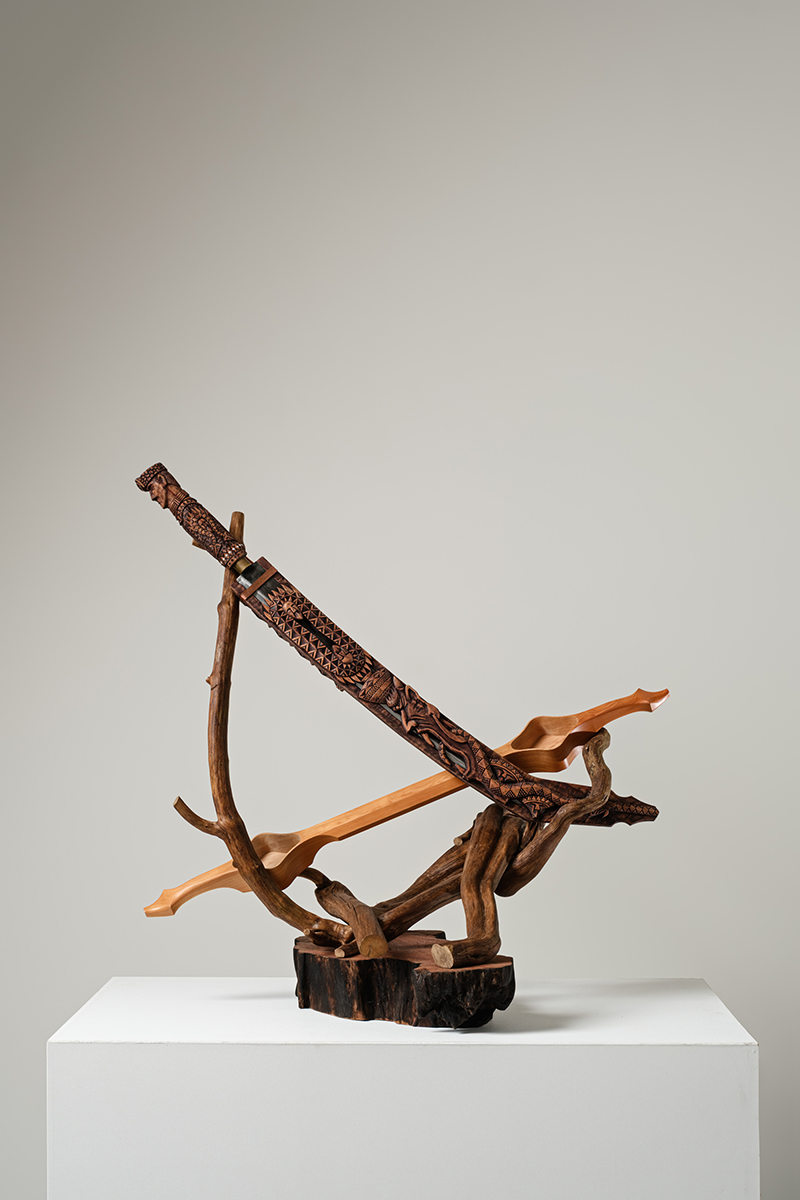
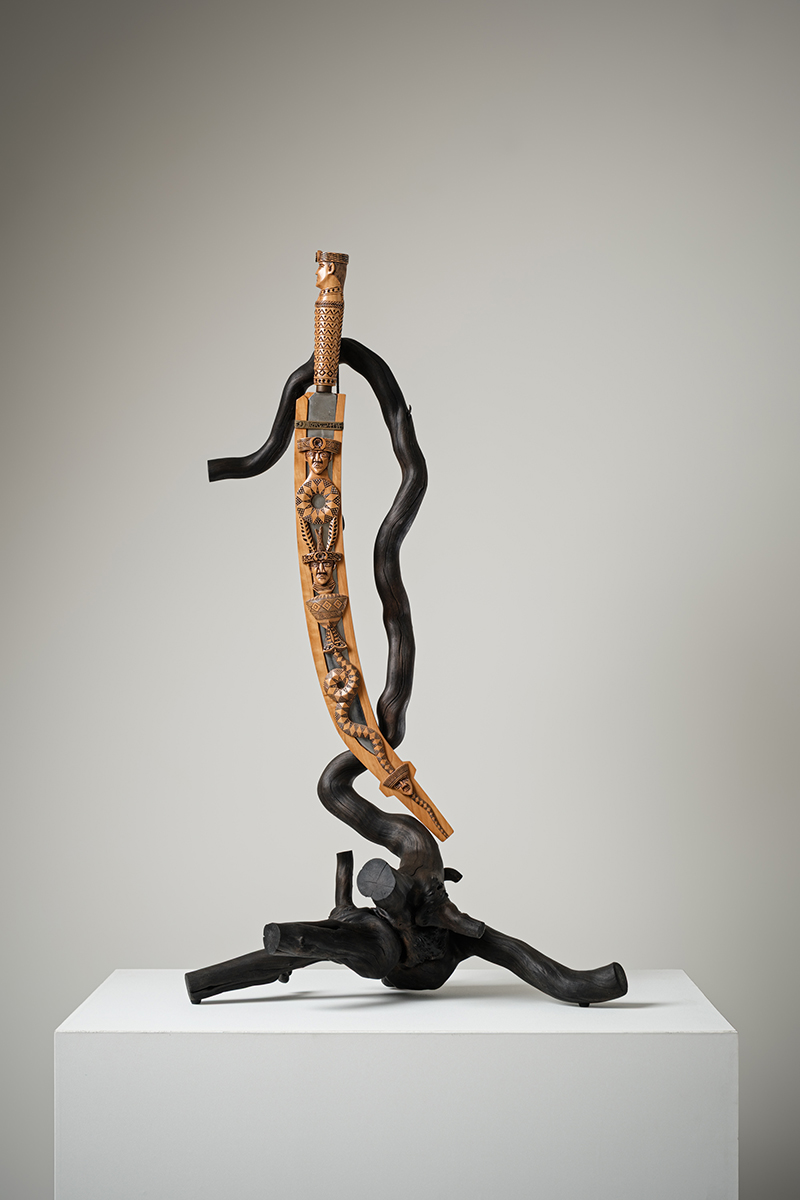
Laluyu Pavelav (Paiwan) was a migrant construction worker in his youth. After returning to his community, he became a self-taught woodcarver within the strong and rich woodcarving culture of central Paiwan. He founded the “Woodpecker Art Workshop” and likens himself to a woodpecker that breathes new life into traditional cultural deadwood, symbolizing the artist’s transformation of decay into marvels. Currently, he is a cultural preserver appointed by the Ministry of Culture, responsible for the transmission of tribal crafts. He exhibits a series of Paiwan ceremonial knives and ritual drinking vessels, which demonstrate his most remarkable craftsmanship. Among Taiwanese Indigenous peoples, several groups have a “ceremonial knife” cultural tradition. These knives are not only practical tools but also carry important symbolic meanings related to coming-of-age ceremonies, social status, and cultural significance. Paiwan ceremonial knives embody ritual and talismanic concepts; their sheaths are often inlaid with exquisite carvings and symbolic motifs such as the sacred hundred-pace viper totem. The ceremonial knife functions as a symbol of male adulthood and social rank, as well as having protective and blessing connotations. Paiwan society has a strict hierarchical system, and the ceremonial knife represents status, holding an irreplaceable core meaning within ethnic identity.
Laluyu Pavelav’s knife carvings are finely detailed, adept at three-dimensional sculptural work featuring traditional Paiwan totems—such as the hundred-pace viper, human figures, and flora and fauna patterns—manifesting the sacredness and aesthetic of traditional culture. He also
uses skillful visual tension to project contemporary spirit. His works commonly employ hard yet carvable woods like jackfruit wood, combined with traditional colors such as vermilion, black, and white, emphasizing multi-layered visual effects on handles and sheaths.