
Eleng Luluan
Taiwan


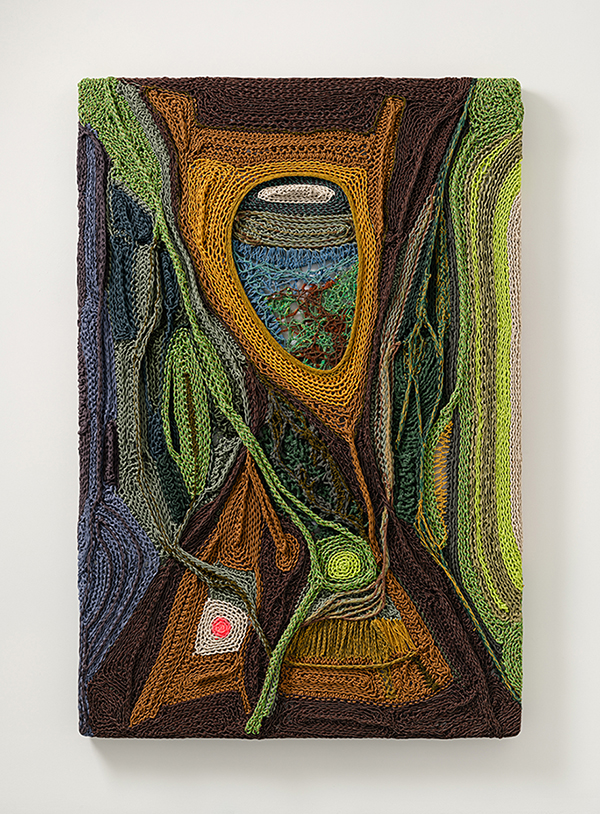
Eleng Luluan (Han name An Sheng-hui) (Rukai) was originally from Kucapungane Village. After 2002, she relocated to Dulan, Taitung, and currently resides in Taimali. As a member of the Rukai aristocracy, she was immersed from a young age in weaving and other deep cultural heritage practices. Active in Taiwan’s contemporary art scene since the late 1990s, her work focuses on cultural loss, colonial trauma, contemporary ecological imbalance, and the rumination of personal experience, especially from the perspective of an Indigenous woman navigating life beyond her ancestral community. Whether through large-scale installations or small-scale works, her art evokes introspection, condensation, and a sense of unspoken restraint. The works exhibited this time center on wooden-frame weaving. Through intricately layered crochet techniques, she constructs complex imagery and metaphor. The series “Land of Watery Abode: A Vanished Place” comprises five small pieces that depict what appear as contour lines connecting mountains, water, flowers, and plants, yet these ancestral water sources can no longer be seen following environmental changes and destructive debris flows. In “Who Am I,” a massive figure with its back to the viewer dominates the composition like an invisible force of life or destiny, representing the artist’s existential self-exploration as she merges long-accumulated anguish and radiance into a structurally dynamic picture. The “Sleepwalking Trilogy” is a deeply personal work presenting several persistent sleepwalking states she has experienced over the years: “The Bridal Chamber Night in Kucapungane (Childhood Sleepwalking),” “The Water Tap in Wutai (Migration and Family Memory),” and “The Enchanted Forest Following the Hunter at Night (Awake Sleepwalking Sensation).”